Thursday, 10 September 2015

Fed Up of Misleading & False Ads? Complain Online

Fed Up of Misleading & False Ads? Now, You Can Stop Them By Filing Complaint Online

Posted by: Mohul Ghosh 


Last year, Amitabh Bachchan created ripples across the advertisement world when he shared that he has stopped promoting Pepsi, because of a young girl: She asked him why is he helping to sell Pepsi when her school teacher has said that soft drinks are poison?

He said, “This impression is on the mind of the people… So I stopped endorsing Pepsi. I tell this to my son Abhishek and to daughter-in-law Aishwarya also… If you have to endorse a product then you have to conduct your life in such a manner that it does not affect others’ lives.”

In this rare case, the moral conscience of a senior actor stopped him from selling a product which is harmful for young children, and serves no purpose to them besides making them overweight and prone to diabetes at an early age.

But often celebrities and brands avoid this moral dilemma, and solely focus on creating an overhyped, sensational ‘image’ of a product so that it sells.

Right from underwear brands which promise extra ordinary powers to shampoos which claims to grow hair, beauty and confidence at the same time, there are myriad instances of overhyped, misleading advertisements, which shouldn’t have been aired.

In fact, The Central Consumer Protection Council (CCPC) has observed thatcelebrities who are promoting such false and misleading advertisements areliable for legal action.

Early this month we had reported that Advertising Standards Council of India (ASCI) has termed health and education ads to be most misleading & deceptive in nature, and cracked down on several of them.

Fairness Cream advertisements, which promise instant glory and fame due to a whitening of skin leads the pack of such immoral, and false commercial propaganda. Infact, ASCI had to issue special guidelines for such Fairness Cream ads, considering how celebrities, both male and female, openly endorse them.

Why Should You Complain Against Any Misleading Ad


Indian Government has constituted Consumer Protection Acts, and Government departments to deal with such misleading and false advertisements, and all consumers are encouraged to use them.

Even if there is no monetary or health loss involved in such ads, there can be severe emotional and mental trauma associated with the portrayal of the ‘victim’. Take for instance Fairness Ads, where the visuals are created so as to impart an impression that girls who are not fair don’t get good jobs, husbands or a life.

There are health products which claim to make children taller, hence more successful. Imagine the mental trauma a child encounters when he is teased for being short, a situation which solely arises due to such advertisements.

Or for instance advertisements where a guy is magically able to attract beautiful girls after spraying deodorant on his body; these ads actually attack the evil social mentality and prejudices and exploit them to monetize it heavily.
How Can You Complain?


Consumer Protection Act, 1986 is an Act which has been made to help consumers deal with such false propaganda, solely designed to exploit human emotions and prejudices.

Consumers can file their complaints by visiting the specific District level consumer courts, and in case their case is not being heard, they can approach State leveland National level consumers courts as well.

Here is the National Consumer Helpline Number: 1800-11-4000, which governs all these bodies, under Department of Consumer Affairs.

Consumers can also visit ASCI, which is a self-regulatory body which takes up such cases of false and misleading advertisements. You can file a complaint right here.

Don’t let brands fool you by playing with your fears and emotions – fight back!

Tuesday, 8 September 2015

Tax-free bonds


Bond Street Action: 
Dalal Street in dumps, you can bet on tax-free bonds
By Saikat Das, ET Bureau | 8 Sep, 2015, 10.16AM IST
MUMBAI: For the faint-hearted retail investors shaken by the turmoil in the equity markets, there is something to cheer about.

More than Rs 10,000 crore of taxfree bonds from state-run companies such as NTPC, Power Finance Corp. (PFC), Indian Railways Finance (IRFC), Indian Renewable Energy Development Agency (IREDA), Rural Electrification (REC) and Housing and Urban Development Corp. (Hudco) are set to hit the market in the next one or two months, three people familiar with the matter told ET.

On an average, investors can earn as much as 7.39-7.67% in post-tax interest from these bonds with 10, 15 and 20-year maturities, going by the benchmark yield reported two weeks ago.


The benchmark, 30-share BSE Sensex declined 1.22% to 24,893.81 on Monday, extending the loss since August 7 to 12%. "It would be wise to raise funds via tax-free bonds now as many retail investors may not be looking at underperforming equities and want to lock in long-term debt products at attractive levels with tax efficiency," said Ajay Manglunia, head of fixed income at Edelweiss Securities. "The fad may fade away in the second half of the year with many PSU disinvestments being lined up, which will be attractive to retail."

Most of the companies seeking to raise from such bonds have appointed investment bankers. NTPC, Power Finance and Rural Electrification are looking to raise Rs 700 crore each. Indian Railways Finance and IREDA are likely to raise about Rs 4,200 crore and Rs 1,500 crore, respectively, and Hudco is aiming for Rs 3,500 crore.

"We are trying to tap the retail money as soon as possible, before the market gets crowded out. We would appoint arrangers in a week's time," said a senior official from one of the companies.

Issuers have already mopped up funds via private placements as the government has mandated such sales only to the extent of 30% of the allotted size.

"Retail investors, who are now sitting on surplus funds obtained from maturing high-yielding term deposits or fixed maturity plans, are willing to invest the same in tax-free bonds," said Rupesh Bhansali, head of distribution at GEPL Capital.

Banks are cutting interest rates, leading to lower returns from deposits, and the Reserve Bank of India is expected to reduce the benchmark rate to spur economic growth.

"Tax-free bonds are worth investing, especially when interest rates are likely to dip in the next two years," said Suresh Sadagopan, principal planner at Ladder 7 Financial, an advisory firm.

"Retired people can have steady annual income flow from it while others can invest surplus funds to have additional income." The central bank has cumulatively decreased rates by 75 bps.

Yields have fallen to 7.75% from 8% about four months ago, pushing prices up. A rate cut expectation is also keeping the interest of investors alive.

Sunday, 30 August 2015

50 Tips For Better Miles Per Gallon


50 Tips For Better Miles Per Gallon


Photographers: Courtsey of Advanced FlowBorlaJustice Brothers
Yeah, yeah. Gas costs a lot, the price of oil is atrecord highs...just like in the '70s. But it's not like you've responded by dumping your 4x4 to advertise hybrids to the neighborhood. Those guys are the weenies; it's much more macho to deal with the pain and torture of filling up dual tanks. Don't we know it-we certainly haven't responded to the high price tag by selling any of our gas-guzzling rigs for more economical junk. But we have decided to try and overcompensate in ways proven to improve fuel economy. Some are more challenging to do than others (walk somewhere?!), but all will keep extra pennies in your pocket. But do remember that the additional weight from the pennies will decrease fuel economy.
* Go ahead, buy that hybrid-we won't mock you. Much. A hybrid gets its ideal fuel economy in stop-and-go traffic, not the highway (because it shuts the engine off and runs on the battery at a stop). But if you start modifying a hybrid with beefy tires and so on to seem less dorky, it starts defeating the purpose of buying a hybrid: fuel economy. And it could void the warranty, depending on what you do.
* Go ahead, buy that econobox-we won't mock you. Actually, we will. But it might be cost-effective to use that as the daily driver and save your 4x4 for weekend excursions.
* Automatic versus manual transmission? Nowadays, automatics are becoming increasingly better than you are at shifting at the most opportune moment. In some new cars, the automatics are actually getting better mileage than the stick version. But manual trannies are still lighter in weight and commonly have more gear choices-plus rowing your own gears adds to performance satisfaction. For now, we'd still go manual for fun and to have the edge on fuel economy.
* The more torquey the engine, the easier it is for the truck to get up to speed without effort. When the engine doesn't have to work hard, you win. That's why a diesel can get better gas mileage than a gas engine-up to 30 percent.
* Don't have guilt about buying a Hemi. It now comes with the Multi-Displacement System (MDS), which shuts off cylinders when the power isn't needed (making it a four-banger!), then behaves like a V-8 when you need the extra get up and go.
* Don't increase your speed to get up a grade. You'll get better fuel economy by maintaining the speed. Do what it takes to climb a hill off road, but the thought remains the same.
* When an air filter gets dirty, less air is able to flow through it. That affects performance, because when there's more air, less fuel is needed for the ideal air/fuel ratio. Get one that's high flow, washable, and reusable (such as from Advanced Flow Engineering, www.afefilters.com). A clean filter can improve things by 10 percent.
* Roof racks, bicycle carriers, and other add-ons cause aerodynamic drag. These can suck up to 50 percent of engine power on the highway. And don't drive around with that kayak, canoe, or mountain bike longer than necessary.
* There's no escaping idling in traffic or at stoplights, but don't do it on the trail or in the morning to warm up your truck. More than 17 percent of energy is lost on this action. Not to mention you're getting 0 mpg.
* If you do need the A/C, heater, or defroster, set it on a low fan speed. If you have rear air and no one is sitting back there, then why is it on?
* While you're at it, stop using the seat heater.
* Accessories suck energy from the engine. That means air conditioning, lights, foglights, window wipers, and even power steering. Swap in a high-output alternator or power-steering pump and you could see a 1 percent improvement. Don't use the accessories if you don't need them.
* A continuously variable transmission doesn't hunt absentmindedly for gears like it sounds. In a way, it has unlimited gears, making it efficient technology, so consider that option if your new-vehicle choice has it.
* Replace the fuel filter if it's getting clogged. Less gas will be able to flow to the engine; you'll ride the accelerator more, and believe it or not, it'll still take more fuel to help the engine compensate.
* If you drive with your windows down at high speeds, it increases drag, which decreases fuel economy.
* A bad O2 sensor can reduce fuel economy a whopping 40 percent. In fact, if the Check Engine light comes on, don't ignore that.
* Less fuel is needed to accelerate if you're moving than if you're stopped. Therefore, there's no rush to get to that stoplight. Maybe it'll be green by the time you get there.
* Don't use thicker motor oil than what the manufacturer recommends because the engine has to exert more effort. Running the proper grade can boost mpg by up to 2 percent.
* Avoid traffic. Unlike a hybrid, stopping and going burns gas.
* Just because cheap gas makes your wallet happy, it might not make your truck happy. If the gas doesn't have the right amount of octane and some other big-word ingredients, detonation could result. Also, additives that prevent the bad deposits might be absent, which could clog the fuel injectors-which hurts fuel economy. If you fill up and your truck starts running crappy, don't buy gas from there again.
* Keep up with oil changes, because if your oil gets dirty, it gets thicker, and we already covered what happens with thick oil. And change the oil filter too. Routine maintenance (read: tune-ups, including checking tranny fluid) is important for mpg.
* Brake drag can contribute to poor fuel economy. Make sure the calipers are retracting all the way and that the drums are correctly adjusted.
* Carpool. Or telecommute. What boss could argue with working from home since it will save the planet and mean you don't need a raise to pay for gas?
* Pull off the carb and put in fuel injection. Fuel injection is more efficient and can get better fuel economy than a carb. The cost of doing this will take forever to make economic sense, so use it as an excuse to get fuel injection for better wheeling experiences.
* If the wheels/tires are out of alignment, more drag is created and it'll take extra energy to keep the truck going straight down the road. Plus, the tires will wear out sooner.
* Is your thermostat functioning the way it should? Cold engines gulp fuel.
* Why are you using premium gas? Unless you've done significant engine mods, 87 octane is fine.
* Towing will reduce your mileage numbers. There's more wind resistance, more weight, and more drag.
* Over- or under-gearing your truck will make the engine work outside of its peak efficiency range.
* Ensure that the spark plugs, plug wires, cap, points, and rotor are all clean, not cracked or worn out, and are set correctly. Dirty spark plugs can misfire; make sure you clean and gap them right. How's the ignition timing?
* Some people believe if they drive with the tailgate down, they'll get better fuel economy. No sense trying to convince them otherwise. But we've found no difference.
* Swapping out the stock engine-driven fan and fan shroud for an electric fan (such as one from Flex-a-lite, www.flex-a-lite.com) is designed to keep the engine cooler as well as get rid of the drag from the stock fan, which in turn can bump up the mileage.
* Adding Overdrive to the transmission will lower the engine rpm to help keep it in peak range. You can get a kit from Advance Adapters (www.advanceadapters.com), such as the Ranger Torque Splitter Two-Speed Overdrive for the manual trans, which adds a gear between each gear already in the transmission, essentially turning your four-speed into an eight-speed. It's one of the priciest fuel-economy fixes, but the Overdrive kit will also help with towing and offer more gear choices off road. Also, higher gears and lower speeds equals an engine turning slower. Less gas is needed to do that.
* Think swapping in a bigger engine is counterproductive to getting better fuel economy? If you've put larger tires and a lift kit on a rig that has a small engine, it might be working harder to maintain freeway speeds. But drop in a V-8, and it will probably improve your mileage because it's better matched to how you've outfitted the truck.
* Have an in-vehicle entertainment system Must be nice to be rich. Shut it off when no one is watching. It's a drain.
* Add a performance (calibration) chip that can reprogram your vehicle's computer, adjusting ignition timing and the air/fuel mix for performance that's suited to your driving style, whether a power programmer or control module. (Try BD Power, www.bdpower.com or JET, www.jetchip.com.) There should be an increase in both hp and gas mileage, among other benefits. Consider it if you tow.
* Keep the tires at the recommended air pressure. You can reduce fuel economy by 3.3 percent if you don't.
* An exhaust system or headers (such as from Borla, www.borla.com) can improve performance, because when air runs into resistance, it can build backpressure. You don't necessarily need the biggest tailpipe, though.
* Big tires equal more rolling resistance. Skinny tires create less friction on the pavement. Do you need a 44-inch tire on the street? More weight requires more effort to move, and lowers your fuel economy.
* vMake sure your speedometer is correctly calibrated, otherwise you have no idea about your true fuel economy.
* Airdams, spoilers, and tonneaus provide better airflow, less drag. The smoother the body of the vehicle, the better the mileage.
* If your wheeling is seasonal, consider taking off the big rubber for something more street friendly until you're ready to hit the trail again.
* Drive someone else's vehicle. Or if they figure out your master plan, maybe sign up for a co-op (check out www.zipcar.com); gas and insurance is paid for.
* Don't accelerate hard or gun it. That wastes fuel. * Use cruise control on most roads. It keeps the mph and internal activity steady.
* Lighten the load. Clear out the bed of spare parts and tools, and clean the interior (those McFood wrappers add up). For every 100 extra pounds you're hauling, that's 1-2 percent worse gas mileage you're getting.
* Make sure your camper or bedcap is level with the top of the cab. It's aerodynamics again.
* Burnt fuel leaves behind all sorts of garbage that can get stuck in the combustion chambers and valves. Using an additive (like Justice Brother's Fuel Injection System Cleaner, www.justicebrothers.com) can be poured into the tank to help remove carbon and other deposits. To slow the burn rate of combustion, there are also octane boosters.
* If you bolted in a larger axle, don't worry about any additional weight from that. Think more about the tire size and final gear ratio combo. Get technical support about choosing the right gearing if you're not sure (such as from Reider Racing, www.reiderracing.com).
* Four-wheel drive puts power (work) to all four corners instead of propelling your vehicle with just the rear two wheels. This means more drivetrain turning, and therefore more drag on your engine. It's not rocket science.
* Bought a new truck or stuffed in a new mill? Don't forget that there's a break-in period, so you may not see its top fuel economy until as many as 5,000 miles on a gas-fueled engine, and up to 20,000 miles for a diesel.
* Don't speed. Every 5 mph over 60 mph can cost up to $0.21 more per gallon.
* Aluminum wheels are lighter than steel wheels, and every pound of weight added decreases fuel economy.


From: http://www.fourwheeler.com/how-to/engine/131-0604-50-tips-better-mpg/#ixzz3kJhI44k2
Follow us: @fwmag on Twitter | fourwheelermag on Facebook

Monday, 24 August 2015

Filing a faulty tax return


You could be filing a faulty tax return; here's how to avoid getting it rejected


He hasn't got money stashed away in foreign banks, doesn't buy benami properties and diligently files his tax return before the last date. Yet, Kiran Chandorkar could get a tax notice because he doesn't declare the interest from fixed deposits and tax saving infrastructure bonds in his return.

"The interest from FDs is tax-free because it is less than Rs 10,000 a year and the infrastructure bonds are tax saving instruments," explains the Bengaluru-based IT professional. Chandorkar is not alone. An online survey conducted by economictimes.com last week indicates an abysmal level of tax literacy. The tax returns of 66% of the 2,158 respondents could get rejected because of faulty information.

Almost 34% could even get a scrutiny notice because of grave errors in their tax forms. Like Chandorkar, almost 30% of the respondents believe that interest of up to Rs 10,000 from bank FDs is tax free in a year. They should know that the exemption under Section 80TTA is only for the interest on their savings bank accounts. What they earn on fixed deposits and recurring deposits is fully taxable.

You could be filing a faulty tax return; here's how to avoid getting it rejected

Similarly, almost 30% believe that the interest earned on the tax-saving infrastructure bonds bought a few years ago under Section 80CCF is not taxable because they were tax saving instruments. Wrong again. The bonds may have helped them save tax, but the interest is fully taxable and has to be reported. Nearly 45% of the 637 respondents who said so earn over Rs 12 lakh a year and should be paying 30% on the income they think is tax free.
You could be filing a faulty tax return; here's how to avoid getting it rejected

"These are very common misconceptions. Our research shows that nine out of 10 taxpayers go wrong in reporting their interest income," says Sudhir Kaushik, Co-founder and CFO of Taxspanner.com. There is also a misconception that there is no need to report the income if the bank has deducted TDS. But TDS is only 10%, and if your income puts you in the 20% or 30% tax bracket, you have to pay additional tax. Of course, if the income is below the basic exemption limit, the TDS will be refunded when the investor files his return.

To be sure, not reporting a small amount of interest income or claiming a deduction incorrectly rank very low in the hierarchy of tax offences. At most you will get a notice with an additional tax demand. There may even be a penalty under Section 271 (c) for concealment, but it depends on how the assessing officer views the transgression. "If the assessing officer is convinced that it was a genuine mistake and the taxpayer's intent was not to evade tax, he might not levy a penalty," says Divya Baweja, Partner with Deloitte, Haskins & Sells.


Fool's paradise

On the other hand, if the intention is clearly to conceal the income, the taxpayer can be in hot water. From this year, the tax forms have a separate column for declaration of property. If you have more than one property, you have to mention it in the return. If it has been rented out, the rental income will have to be declared in the return and tax paid on it. Even if the property is lying vacant, the owner has to pay tax on the notional rent from the property. This notional rent is the prevailing market rate in that location. "This rule about the tax on notional rent was always there. It is only that this year's tax forms have made it clear by providing a separate column for such property," says Vineet Agarwal, Partner in KPMG India.
You could be filing a faulty tax return; here's how to avoid getting it rejected

If you don't declare the second property, it amounts to concealment of income and could attract a severe penalty. "Such a taxpayer will be seen as a wilful defaulter and could get slapped with a penalty," says Kaushik. Shockingly, nearly 20% of the survey respondents fall in this category. They believe that there is no tax implication of a house lying vacant. One out of three such taxpayers are in the highest 30% tax bracket.

Keep in mind that even if you are able to avoid mentioning the property in your tax return, it will ultimately get noticed by the taxman. TDS is now applicable on property transactions above Rs 50 lakh. If and when you sell the property and claim indexation benefit on long-term gains or seek a refund of the TDS, the tax department might want to know why the property was not declared in the tax return of the owner from the time it was purchased.

Declaration of foreign assets

This is one area where taxpayers need to really be very careful this year. Uncovering black money is high on the government's agenda, and any slippage on reporting of foreign assets immediately puts you in the dock. "The logic used by the tax department is that anyone with foreign assets has high income and should not be spared if he has concealed income," says Komal Agarwal, Partner in Mahesh K. Agarwal & Company. Thankfully, almost 89% of the respondents got this right.

You could be filing a faulty tax return; here's how to avoid getting it rejected
But that still leaves around 11% of taxpayers who might falter when it comes to declaring their foreign assets. The department is keeping a close eye on the accounts and assets held outside India. The new ITR-2 requires you to give details of your foreign bank account's holding status (both as an owner and as a beneficiary), account opening date, interest accrued during the year and schedule and fields number under which the same income is reported.

Not only foreign bank accounts, but even domestic bank accounts need to be reported in the new forms. "A taxpayer has to report all his bank accounts in the return. If you miss any, it amounts to concealment of information," says Preeti Khurana, Chief Content Editor, ClearTax.in
.

TDS gives you away

For many taxpayers, TDS is a four-letter word. More than 15% respondents said they would spread their investments across bank branches to avoid TDS. This might help them avoid TDS, but it's a ticking time bomb. Till now, TDS kicked in only if the income from FDs made in a particular bank branch exceeded the threshold of Rs 10,000 in a financial year.

You could be filing a faulty tax return; here's how to avoid getting it rejected


But this year's budget has changed the rules and TDS will now apply if the combined income from FDs in all branches of a bank exceeds the threshold. Another significant change is that TDS will apply to recurring deposits if the interest during a financial year exceeds Rs 10,000. "The tax department is increasingly connecting the dots. An individual's financial life can no longer remain hidden," says Vikram Ramchand, Co-founder of makemyreturns.com.

TDS is a dead giveaway because it shows up in the taxpayer's Form 26AS. If the income and the TDS is mentioned in the Form 26AS but you haven't reported it in the tax return, the mismatch will be picked up by the computerised scrutiny system in the tax department and a notice will be issued. How lenient an assessing officer will be in such a case is anybody's guess.


Clubbing of income

Another way taxpayers are falling through the cracks is clubbing of income. Tax rules say that if you invest on behalf of your spouse or minor child, the income from the investment will be treated as yours. But more than 30% of the respondents believe that there is no tax implication if they invest in a recurring deposit in their wife's name or open a fixed deposit in the name of a minor child. This could prove to be a problem if the amount invested in the name of the spouse is significantly large and not commensurate with her known sources of income. Of the 668 respondents who believe this, more than 30% are in the highest tax bracket. Another 50% earn more than Rs 5 lakh a year, which puts them in the 20% tax bracket.
You could be filing a faulty tax return; here's how to avoid getting it rejected

A small minority of taxpayers is also going wrong about whether they have to file their returns at all. But a significant 45% is mistaken whether they have to take the online route or not. 

Online filing is compulsory if your income is above Rs 5 lakh, you have foreign assets, or are claiming a refund. "Even if a physical return is accepted in the last-minute rush, it will ultimately get rejected," says Kaushik of Taxspanner.com
You could be filing a faulty tax return; here's how to avoid getting it rejected

Missing out on deductions

Not all of the mistakes that taxpayers make raise the hackles of the taxman. Some also cost the taxpayer. 

More than 40% of the respondents did not know that along with the interest on a home loan for a self-occupied house, even the processing fees for the loan is also eligible for deduction under Section 24.

Another 15% was blissfully unaware that the fees paid for a preventive health checkup of the taxpayer and his family is eligible for deduction under Section 80D. 

A small but significant 7% were not aware that tuition fees of up to two children can be claimed as a deduction under Section 80C.

Monday, 17 August 2015

4 Basic SEO Principles to Increase Your Website Traffic

Top 4 Basic SEO Principles That Increase Your Website Traffic


Blogger conferences have been a great resource for me as an entrepreneur. In July, New York City was host to two huge blogger events, BlogHer and Blogger Bash, where more than 5,000 bloggers gathered to meet with brand representatives and attend sessions to hone their online skills.
Sheryl Simonitis, vice president of marketing at Noodle, a destination education website, shared a few SEO tips that any entrepreneur can use. The startup allows parents and students to make better education decisions in an environment that is completely unbiased so that a child and parent can find the best resources for their needs. Parents need to be able to find the company in an online search, so Noodle is well versed in SEO and are always producing with the consumer in mind. This is an idea every businessperson should follow.
I followed up with Simonitis after the conference to find out the basic SEO principles that make a difference and increase any business's website traffic.

1. Keywords

When you think about creating content, know the words that people are using to search. Every page should be built around keywords that are most important to you and your company. Do your homework. When you are producing pages for your website, use the best keywords on every post. 
Google helps you with your keywords. When you start to type into the search bar on Google, it gives you suggestions of popular words or phrases that people use in a search. If you want to take it one step further, you can use a tool called Google Keyword Planner that will tell you popular keywords. It will tell you true numbers of how many average monthly searches are occurring with those keywords.

2. Image tags

People have images all over their websites, and I am always surprised when bloggers don't identify the images. Google indexing sites need to understand what the image is and when it should be served up. You must tag your images. If there are none, Google does not know how to identify the image.
In WordPress, Yoast is a plugin that reminds you to label your images. With tags, Google will know what the image is, how to index it, where to store it and when to bring it up in a search.
3. Meta description
Right below your URL on the search page is a sentence that serves as the meta description. This is an important summary that tells people what they will learn on the page. You want it to be engaging and truthful and prompt people to click and learn more. Use call-to-action words such as "learn" and "visit" to engage people and encourage them to find out why the information on your page is important to them.

4. Backlinks

One of the things that is highly valued in SEO are backlinks. Backlinks are incoming hyperlinks from one webpage to another -- in other words, people linking to your website because they found value in what you're saying. In addition, you'll want to include hyperlinks to give your readers more useful information and to help build relationships with other bloggers.
Make sure that the links add value to your readers' lives. You can never have too many backlinks for an article. You will build high traffic that will help you rise up in the results.
These are tips you can implement with your next blog post to potentially increase your website's traffic and gain new followers or customers. Give them a try and see what they can do for your business

Thursday, 6 August 2015

Top rated health plans to choose from

Top rated health plans to choose from

Mint Mediclaim Ratings look at about 60 mediclaim products to help you find the most suitable one
http://www.livemint.com/Money/TcUDgaFePLuqpGXCaOUQeL/Top-rated-health-plans-to-choose-from.html

Have you ever bought a nice shirt at a big discount, patted yourself on the back for getting a good deal and just two wears later had to discard it because the quality was poor? Many make the same mistake while buying health insurance. They buy on the basis of price alone. Yes, they do save some money in the process, and that is fine so long as they don’t end up in hospital. And should such a policyholder end up getting hospitalized, that is when she realizes the true value of her cover because what she has to pay the hospital is much more than what she had saved.

In order to reduce the prices, the insurer laces the policy with exclusions, limiting its liability. A policy that has many exclusions and caps may be cheap but won’t be effective. Hence, we recommend that you go beyond premiums—pay close attention to features of the policy, and then buy one that fits your budget. After all isn’t that what you do when buying a car? Why should health insurance be any different? Yes, it may be tougher because while you may know what to look for in a car, you may not in a health insurance plan.

To help you look at important features and compare, we bring to you Mint Mediclaim Ratings (MMR), developed by SecureNow Insurance Broker Pvt. Ltd. MMR rates health insurance policies on the basis of various parameters such as price, features, and claims record of the insurance company, that are important to consider when buying health insurance. But before you jump to the ratings, start with understanding the policies considered, the parameters we have taken and how we have rated them.

Health plans considered

There are broadly two kinds of health insurance policies: indemnity and defined benefit policies. A basic health insurance policy is an indemnity product that pays for your hospitalization. It covers hospitalization expenses, pre- and post-hospitalization expenses and listed daycare procedures. Defined benefit policies pay a stipulated sum on an insured event. For instance, a critical illness policy will pay the sum insured—the defined benefit—if you contract any of the insured critical illnesses, and the plan will then terminate. But a basic health insurance pays for your hospitalization up to the sum insured in a policy year and can be renewed for life.

MMR considers basic health policies because what you need the most is insurance to cover hospital bills. We have rated around 60 products for 23 non-life insurance companies, including stand-alone health insurers, and three life insurance companies that offer indemnity health products.

We have further divided health insurance into individual and family floater segments. A family floater considers the entire family as one unit. If one member makes a claim, the cover reduces by that much for all members in the policy year. This is why we recommend a higher cover on a floater, and accordingly we have rated plans for a sum insured of Rs.10 lakh and Rs.20 lakh for a family of four in two age categories: eldest member being 35 years and 45 years of age. For senior citizens who are 65 years old, we have considered a family of two.

For individuals, we have four age categories: 35, 45, 65 and 70 years. We have taken a sum insured of Rs.5 lakh for each. For the 70-year category, in the January 2015 edition of MMR, we had rated products with a sum insured of Rs.10 lakh. This time we have expanded to introduce another category—Rs.20 lakh.

Ratings drivers

For ratings we have broadly taken three essential categories, price, features and claims record, and have assigned weightage. With the price of a policy being an important factor, it continues to get a high weightage of 30%. Product features are sub-divided into six categories and together constitute 45% of the weightage, which means the basic features are more important to consider than premiums. Here the exclusion on pre-existing ailment figures on the top as it is one of the main reasons for claim rejection. While most insurers exclude pre-existing ailments for four years, a few limit it to two-three years. Exclusion gets a weightage of 15% and policies with a lower waiting period score higher. Sub-limits on room rent is the second most important feature as the policy doesn’t just cap the expenses on room rent but also other associated medical costs. If you opt for a higher category room, you will pay not just the difference in rent but other incidentals as well. It gets a weightage of 8%, and a policy with no sub-limits gets full marks.

Other features get a weightage of 5.5% each. Initial waiting period on specified ailments such as cataract and hernia, where procedures can be planned, are standard but there are some policies that waive off the wait. These get full marks. Even after the waiting period, insurers can cap their liability on such ailments. Increasingly most restrict this capping to cataract alone and those products get full marks. Co-payment, in which you bear a portion of the claim amount, is another factor to consider, especially if you are a senior citizen. Given that you are more likely to need medical care at that age, insurers limit their liability by asking you to pay a part of the bill. For others, there may be co-payment on certain ailments or if treatment is done outside the insurers’ network of hospitals. Those with no co-payment, get full marks.

The weightage on no-claim bonus is 5.5%. If a claim is not made, insurers reward you by increasing the sum insured. Those that bump up your bonus by 10% or more in a no-claim year get full marks given that medical inflation is at least 10%.

Claims settlement record comprises 25% of the weightage. We have sub-divided it into three parts: percentage of pending claims over six months has a weightage of 5%, percentage of settled claims is 15%, and claims complaints per 10,000 claims registered gets 5%. Complaints registered is a new category and is important as it reflects the number of dissatisfied customers with regards to claims. Since non-life companies don’t break up complaints according to product categories in public disclsoures, we have taken the data for the entire portfolio. Life insurers have sent data specific to their health portfolio. Claims settled is calculated by dividing the number of claims settled by number of claims on which the insurer has taken a decision. The denominator is the sum of claims settled plus claims repudiated plus claims closed.

The methodology

We took the data from insurers’ websites, product brochures and public disclosures, and sent the same to insurers to cross check and point out discrepancies. Three insurers, Oriental Insurance Co. Ltd, United India Insurance Co. Ltd and Star Health and Allied Insurance Co. Ltd, did not respond.

Each parameter had a weightage, a score was assigned and a weighted score was calculated. This was added up for the final score, which could range between nil and 100%. Policies with most of these features have been rated A and their scores lie between 65% and 100%. Subsequently, policies shift to B with a score of 45-64%, and the rest are in the C category.

Don’t stop at the final ratings; download the granular ratings of each policy for all parameters fromwww.livemint.com/mintmediratings. Choose the features you need in a policy and then pick one according to your budget.

Sunday, 26 July 2015

New Mahindra Thar customization options


New Mahindra Thar customization options

By  Updated on 
If you are thinking of a new Mahindra Thar, then the carmaker aims to make the vehicle that little more special by offering you a choice of customization options. These modifications are done at the dealer, although you could also order the parts and then fit the kit yourself – ideal if money is a bit tight, yet what your Thar to look special.
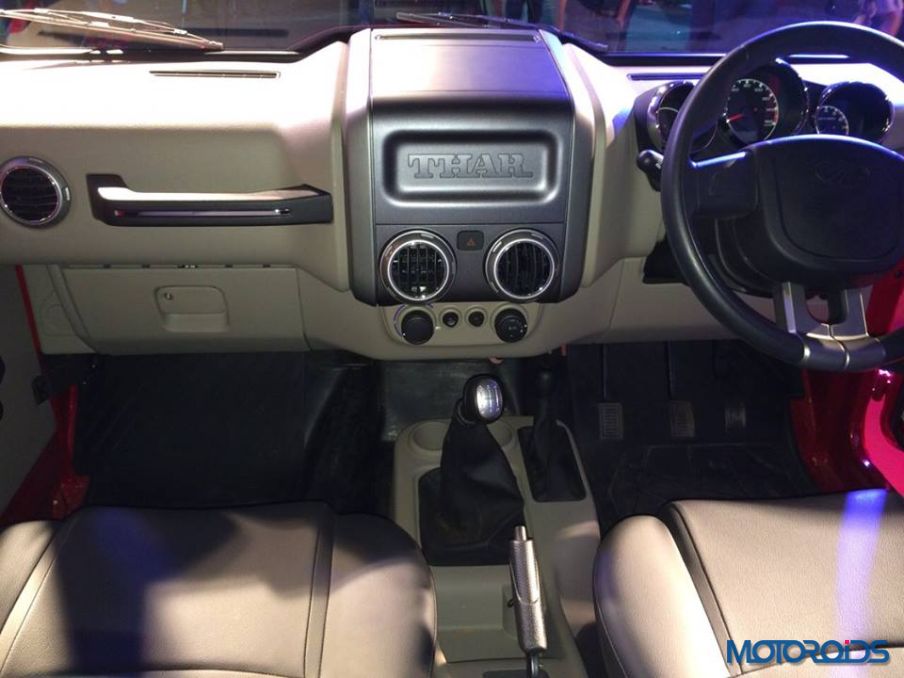
The Mahindra Thar facelift is a much-improved version because it has finally got rid of the image of being a bit too plain. The interior was never the best feature, but that is no longer the case.
However, if you feel those new Mahindra Thar changes are not enough, then you do have those customization options, which you can do so here.
2015 Mahindra Thar release
The exterior options are as follows: Front bull bar in stainless steel, Bull bar mounted auxiliary lamps, Winch, Modified front grill with mesh, Inset headlamps, Modified front fenders with inset indicator lamps, Restyled wheel arches with Allen head studs, Styled side scoops with mesh, Side guards in stainless steel, Twin pipe roll cage in stainless steel, Roll cage mounted auxiliary lamps, Styled tail lamp bezel with Allen head studs, Modified rear bumper, Twin pipe exhaust tail ends in stainless steel, Alloy wheels, Tyres, Custom paint in candy pearl red with matt charcoal combination, Window line blackening, and Front and rear mud flaps.
As for the 2015 Mahindra That options, those are: Colour coded interiors, Upholstery in black leather with red piping, Custom built centre console with Bottle holder, Storage zones, Power window console, Auxiliary power source, Leather wrapped Steering wheel, Gear knobs, Dash grab handle, Gear lever boots, Instrument cluster cover in red leather, Centre switch plate in red leather, and Door trims in leather. You also have the option to add Styled map pockets on driver and co-driver’s door, Mobile holders on driver and co-driver’s door, Restyled dash garnish with storage zones, Modified centre switch plate, 2DIN touch screen mp3 player with GPS and Bluetooth, Front 6″ round component speakers, Rear 6″X9″ oval speakers, 4 channel amplifier, Front speaker box, and Rear speaker box on tail gate.
These are just the standard options, so if you are looking for something a bit more extreme, then you can opt for one of these.
The new Mahindra Thar price in India depends on the region, such as Chandigarh Rs 8.21 lakh, Pune Rs 8.04 lakh, New Delhi Rs 8.25 lakh, Bangalore Rs 8.29 lakh and Chennai Rs 8.32 lakh all Ex-Showroom.

http://www.product-reviews.net/2015/07/24/new-mahindra-thar-customization-options/


2015 Mahindra Thar CRDe First Drive Review : Iron Boar

2015 Mahindra Thar CRDe (21)


The Classic CL340 was the first Mahindra to shed the UV maker’s utilitarian image. A Rastafarian cousin of the rugged MM540, the Classic was the rebellious one, with its bright red paintwork, liberal usage of chrome, bucket seats, and stylised roof canopy.
Story : Ayan Ghosh with inputs from Kamraan Maansoor
The Thar, launched in 2010, owes its genes to the MM540 and CL340 cousins. The already rugged framework was given additional, and much needed muscle in the form of the 2500 cc, CRDe diesel engine, while other friendly touches, like air-conditioning, power steering and radio were added.
It’s time for a new Thar then, and we sampled it at the Mahindra Offroading Acdemy in Igatpuri, near Nasik. The new Thar CRDe has already been launched, and retails for INR 8.03 lakh (ex-showroom Mumbai). We have already reviewed the exterior and interior changes in great detail. Incase you missed it, read about them here.
How do the revised interiors feel?
2015 Mahindra Thar CRDe dasboard (1)
Climb inside, and the high-set, truck-like driving position reeks of authority old school fervour. Visibility out of the slit like windscreen isn’t all encompassing but it’s all a part of the “all things Jeep” attitude. The new steering wheel is posher than before, feels better to hold and properly positioned with reference to the driver’s seat.
Overall levels of fit and finish have improved in leaps and bounds, considering the earlier Thar was severely archaic. For 2015, one can even opt for dual tone upholstered seats with Thar branding and new colors for the re-designed canopy. For the rear occupants however, things aren’t that great, as always. The grab handles aren’t fixed, and keep sliding according to the vehicle’s position.
How does it drive?
2015 Mahindra Thar CRDe (27)
Apart from the enhanced exteriors and premium new interiors, the new Mahindra Thar gets an automatic rear differential locking system. The rest of the mechanicals continue unchanged, which means that power comes from the tried and tested, 2498 CC, CRDe diesel engine, and is rated at 105 bhp. A peak torque of 247 NM sets in at 1800 rpm.
A five-speed manual transmission reigns in the horses, while a standard 4WD system with high & low ratios ensure proper off-road prowess. The Borg Warner transfer case comes with a 2 Speed gear reduction – HIGH 1.0:1 and LOW 2.48:1.  While the High mode is to engage 4×4 for normal or moderate off-road usage for increased traction on all four wheels, it’s the Low range ratio that really pulls one out of the muck.
Pedal action is harder than average, and the shifts on the gearbox aren’t the slickest around. But being refined isn’t what the Thar is built for.
2015 Mahindra Thar CRDe (82)
The extreme 44 degree approach angle and 27 degree departure angle, along with the short overhangs makes sure that the Thar still retains its wall scaling abilities. A short wheelbase and a 200 mm ground clearance add to the cause.
Having a low ratio allows one to have more torque and power (but lower speeds) for any given engine speeds. This helps is climbing obstacles with aplomb, without the wheels spinning away and causing slippage. Stick the new Thar in 4L (low ratio), and it crawls up 40-degree inclines without breaking a sweat.
Our brief drive around the entire circuit of around 45 minutes, which was full of treacherous surfaces, mud, slush, and knee deep standing water. The Thar barely scratched its bottom on anything.
Now, we’ve already driven the earlier Thar in its natural habitat. The only new addition for 2015 is the an optional MLocker by Eaton. This mechanical locking differential engages automatically during low traction situations when a wheel speed difference of 100 RPM or greater (left-to-right) is detected, thus ensuring the vehicle gets the best traction possible.
So basically, it senses the tyre which has lost traction and locks it to transfer maximum drive line torque to both the tyres, and can help you pass your way out of a difficult situation.
2015 Mahindra Thar CRDe (84)
We wish the new Thar CRDe had the manual option for the new locking differential, since the diff-lock may sometimes do more harm than good. Imagine a scenario where on a tough track, the vehicle goes on three wheels and the tyre which has traction is the one stuck in mud. The more power it gets, the worse it will make the position of the vehicle, which will dig itself in.
Remember, the diff-lock’s sole function is to prevent getting stuck, the same may not help one to get out of a sticky situation. As it happened our Thar got stuck in the mud which can be better described as chocolate slush, the 4×4 with its rear diff lock came to a stand-still and we had to wait for the recovery car which got us out using a tow winch.
The two things we wished we had that very moment were – manual diff-locking, and optional front diff- locks.
We appreciate Mahindra’s step forward with its Offroad Training Academy. With time we will get to see well-trained offroaders taking their 4×4’s to its maximum potential. We feel, with the right driving skills the fun and excitement you can have in the THAR is virtually limitless.
Is it worth it?
2015 Mahindra Thar CRDe (17)
We wonder if we should call it overpriced, but with no signs of the new Force Gurkha, the new Thar has virtually no competition. Fanboys will instantly lap it up without a second thought, but we hope Mahindra had offered more.
The new automatic locking differential is a welcome addition, but as a standalone feature, doesn’t sound very convincing. A manual option should have been offered, along with optional front diff- locks.
The new exterior embellishments are neat, but come across more as a half-hearted effort. Agreed, anything more would have totally ruined the Thar’s character, but we believe things could have been resolved with more panache.
The interiors are thoroughly improved over its predecessor, and could possibly milk in a set of new owners. So, for those seeking a rugged, go-anywhere vehicle which could also double up as a daily driver, albeit with a few compromises, the Thar fits best.
Worry not, the Thar is still a fiercely capable vehicle when the going gets tough, and for that very reason, coupled with its iconic, macho looks it warrants a buy – a somewhat fitting evolution to the MM540.